
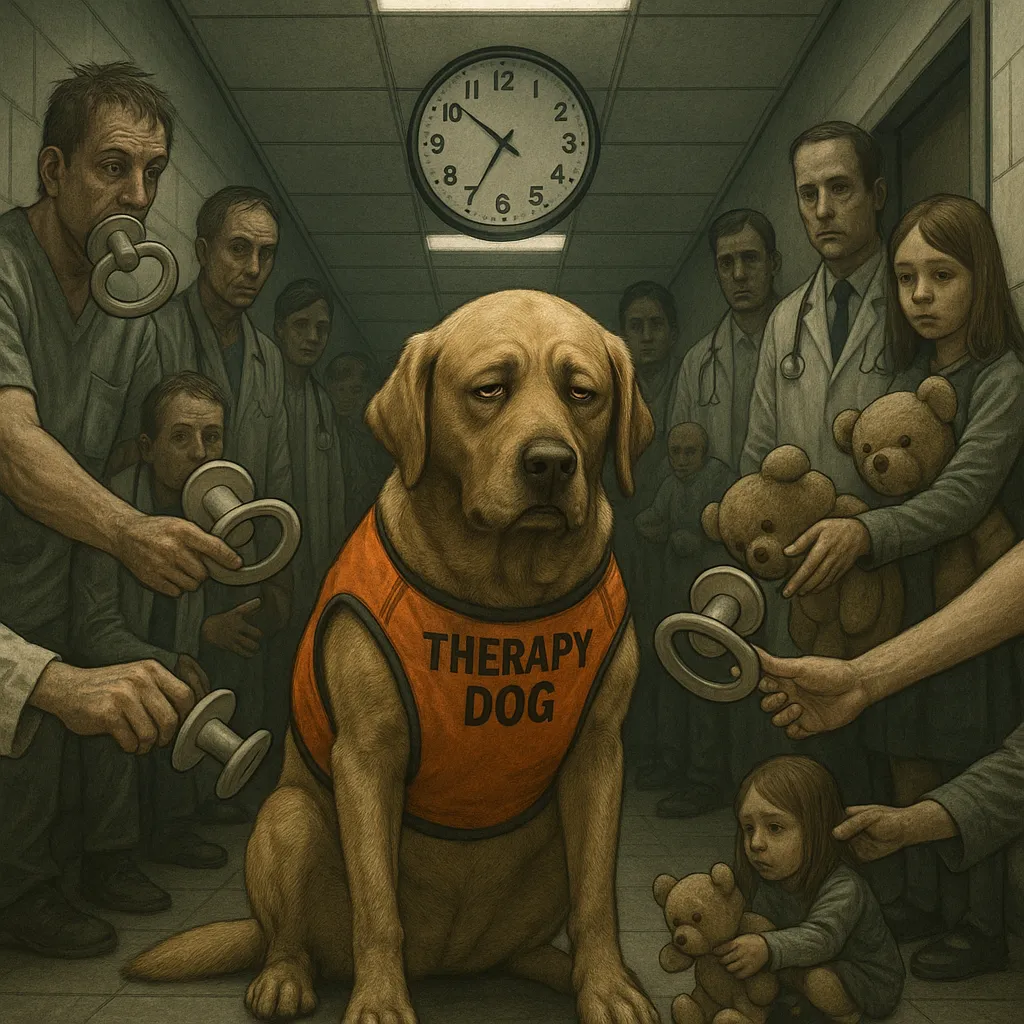
The 24/7 Human Pacifier
Nobody asks, what it means for the dog.
- Always on-call.
- Always expected to absorb fear, sadness, boredom, and trauma.
- No days off.
- No “not today.”
- No consent, ever.
Humans get to clock out. The dog? Never.
Every shift is “smile, endure, let strangers pet you, ignore your own needs, make everyone feel better.”
They call it “therapy.”
I call it a soul-grinder with treats.
“He Loves His Work!”—The Lie That Never Dies
Let’s get clinical:
Chronic overexposure to unfamiliar smells, erratic emotions, unpredictable hands, endless noise—no dog loves that for long.
What you get isn’t “love for the job,”
It’s learned helplessness:
- Dead eyes
- Flat affect
- The permanent “good dog” act
- Any real emotion? Untrained.
If the dog finally cracks—snaps, gets sick, hides—it’s his “fault.”
Nobody blames the feel-good industry, only the animal that finally couldn’t anymore.
The Price Tag: Stress, Breakdown, Burnout
- Adrenal system fried
- Immune system in Dauerfeuer
- Gastro-intestinal disorders, skin problems, emotional flattening, and early aging
- Dogs that once wagged now flinch at touch or new places
But as long as the humans feel better?
“Job well done!”
Charity or Emotional Vampirism?
Let’s call it what it is:
Humans offload their emotional garbage onto an animal.
No matter how cute the vest, how sweet the brochure, how telegenic the Instagram post—
It’s still the exploitation of a sentient being for the comfort of another.
The Only “Therapy” Worth a Damn
Therapy starts when the animal’s needs come first—not as an afterthought.
- The right to say no
- The right to rest
- The right to walk away without consequence
If your “therapy” relies on a being that can’t opt out, it’s not healing—it’s hostage-taking with a smile.
Final Verdict:
Next time someone brags about their “hero dog changing lives,” ask yourself:
Who’s changing the dog’s life—and at what price?

