
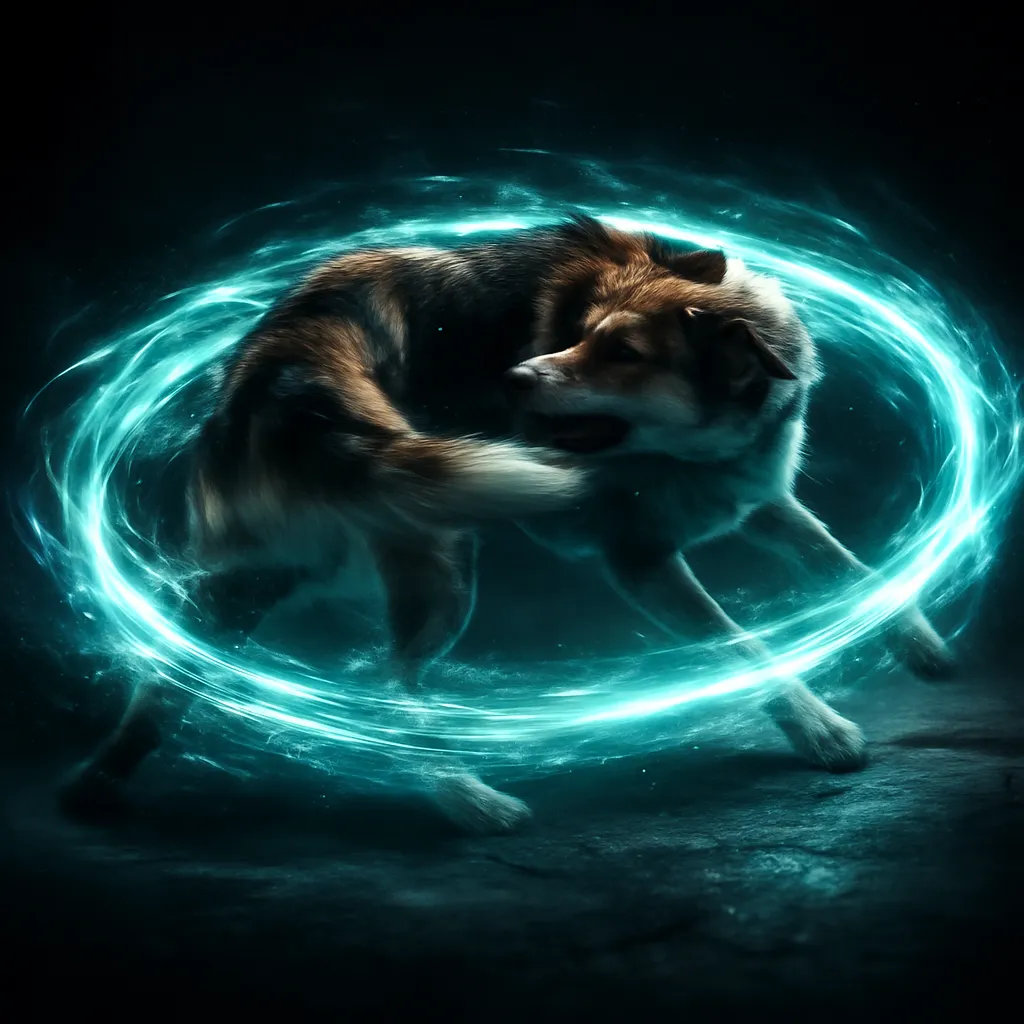
Tail chasing, shadow obsession, endless pacing — compulsive behavior isn’t quirky, cute, or a sign your dog needs more exercise. It’s a neurological SOS. Learn what compulsions actually mean, why training always intensifies them, and how relational, nervous-system-based care brings real relief — without sedation, suppression, or behavioral games.
The Nervous System’s SOS Signal (And Why It’s Not “He Just Needs More Exercise”)
Compulsive behavior in dogs is one of the most misunderstood and mismanaged categories in the entire animal world.
People see a dog chasing his tail or obsessing over shadows and think:
- “He’s bored.”
- “He’s quirky.”
- “He needs more stimulation.”
No.
If anything, compulsive dogs usually need less stimulation — and a hell of a lot more safety.
Compulsions are not cute, funny, or personality traits.
They are dysregulation patterns — loops the nervous system gets trapped in when it has no other way to cope.
Let’s unpack it.
What Compulsive Behavior Really Is
A compulsive behavior is a self-regulating survival loop the dog uses when all other regulation strategies have failed.
It is not:
- stubbornness
- misbehavior
- excess energy
- lack of exercise
- entertainment
- dominance
- manipulation
It is neurological distress expressed as repetition.
In humans, we call it OCD.
In dogs, we call it “He needs a hobby.”
We should stop doing that.
How Compulsions Develop
Compulsive patterns arise when:
- Stress accumulates without relief
- The dog doesn’t feel safe enough to rest
- Somatic signals are ignored or punished
- The environment is overstimulating or unpredictable
- The dog has no agency or ability to escape pressure
- Early trauma or chronic stress altered neural pathways
- Humans attempted to “train it away,” which backfired
Yes — training always makes compulsions worse.
Because training suppresses signals instead of resolving the cause.
What Compulsive Behavior Looks Like
- Tail chasing
- Flank biting
- Licking the floor, walls, or air
- Shadow or light chasing
- Rock or object fixation
- Repetitive pacing
- Ritualized sequences
- Obsessive scanning for a specific trigger
These aren’t quirks.
They’re the dog’s last attempts to create internal order in a world that feels chaotic.
What NEVER Helps
Let’s list the classics people try — all of which fail:
- “Interrupting” the behavior
- Correcting or scolding
- Rewarding alternative behaviors
- Increasing exercise
- Increasing stimulation
- Ignoring
- Redirecting with toys
- Obedience drills
Why do these fail?
Because they all target the behavior,
while the problem lives in the nervous system.
You cannot “train” a brain out of dysregulation.
What Actually Helps
Compulsive dogs need:
- Stability, not stimulation
- Predictability, not pressure
- Grounded human presence
- Reduced sensory load
- Somatic orientation practices
- Support for self-regulation
- SLOWING DOWN — everywhere, always
These dogs don’t need more activities.
They need fewer reasons for their nervous system to panic.
Conclusion
A compulsive dog is not “obsessed” or “hyperactive.”
He is overwhelmed.
And while training suppresses symptoms and deepens the disorder,
Relational Neuroethology restores the dog’s ability to regulate, rest, and reconnect to his own instincts.
And medication?
Antidepressants don’t resolve compulsions — they just chemically dim the distress while the nervous system stays trapped in the loop.
Healing requires safety, not sedation.

