
A Practical Guide to Doing Everything “Right”
A Necessary Clarification
The purpose of this text is not to accuse, but to expose patterns that have become so normalized they are no longer recognized as harmful.
This is written deliberately in a sarcastic and inverted tone.
It is not an instruction manual.
It is a mirror.
If you find yourself feeling defensive while reading, pause.
Defensiveness is not a sign of being attacked—it is often a sign of recognition.
This lesson is meant to sharpen awareness, not to shame.
Harm is rarely intentional. But intention does not erase impact.
Read it slowly.
And read it honestly.
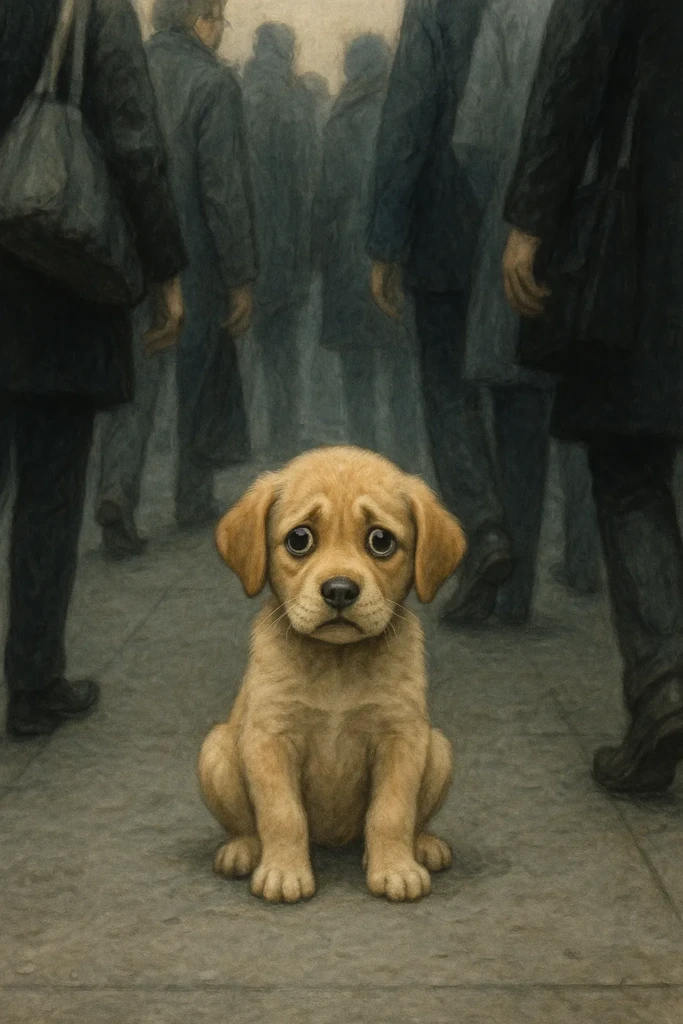
Harming a dog does not require cruelty.
It requires good intentions, social approval, and a firm belief that one knows better.
Most dogs are not harmed by violence.
They are harmed by well-meant, normalized practices that undermine their nervous system, their orientation, and their trust—slowly, quietly, and efficiently.
This here is not about extremes.
It is about the everyday.
1. Ignore Developmental Timing
If you want to harm a dog effectively, assume readiness where there is none.
Expose early.
Demand quickly.
Expect consistency from an immature nervous system.
Treat puppies as small adults and adults as machines.
Call overwhelm “learning” and collapse “calm.”
Development will adapt.
It always does.
Just not in the direction you think.
2. Replace Understanding With Control
Use commands where orientation is needed.
Use rules where relationship is required.
Use techniques where presence would suffice.
When the dog hesitates, correct.
When the dog resists, persist.
When the dog shuts down, praise calmness.
Nothing damages learning faster than obedience without understanding.
3. Silence Communication
A communicating dog is inconvenient.
So label signals as:
- manipulation
- dominance
- stubbornness
- attention seeking
Interrupt stress signals.
Redirect fear.
Ignore withdrawal.
Teach the dog that expression changes nothing.
Dogs that stop communicating are often called “easy.”
They are not.
They are resigned.
4. Normalize Chronic Stress
Stress is easy to excuse.
Call it stimulation.
Call it enrichment.
Call it socialization.
Call it “a little push.”
Never allow recovery to matter as much as exposure.
Never question cumulative load.
A nervous system under constant low-grade stress will reorganize itself.
You just won’t like the result.
5. Confuse Adaptation With Health
A dog that functions is assumed to be well.
If it eats, plays, obeys, and does not protest, everything must be fine.
Ignore:
- emotional flatness
- hypervigilance
- rigid routines
- loss of spontaneity
- dependence masked as loyalty
Adaptation keeps organisms alive.
It does not make them whole.
6. Make the Dog Responsible for Human Stability
Lean on the dog emotionally.
Expect regulation, comfort, loyalty, patience.
Punish distance.
Reward closeness.
Call it bonding.
Dogs will comply.
They always do.
And they will pay for it later.
7. Look for Solutions Instead of Causes
When problems appear, escalate.
More training.
New methods.
Stronger incentives.
Tighter structure.
Never slow down.
Never look back.
Never ask what the dog had to become in order to cope.
Efficiency is the enemy of insight.
8. Believe Love Is Enough
This is the most effective one.
Love sincerely.
Mean well.
Feel deeply offended by the idea that harm could occur anyway.
Love without understanding is not protection.
It is projection.
Dogs do not need to be loved harder.
They need to be seen more clearly.
The Uncomfortable Truth
Most harm is not caused by malice.
It is caused by unquestioned normality.
Practices become invisible when everyone uses them.
Damage becomes unrecognizable when it looks polite.
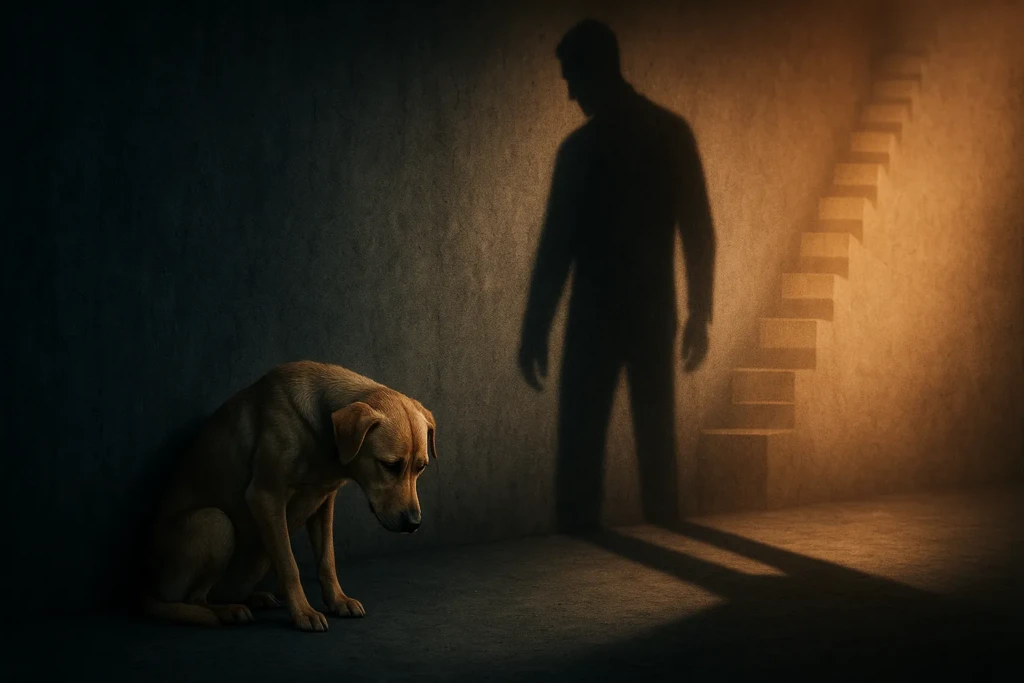
Dogs break quietly.
And when they finally cannot hold themselves together anymore, humans are surprised.
They shouldn’t be.

