
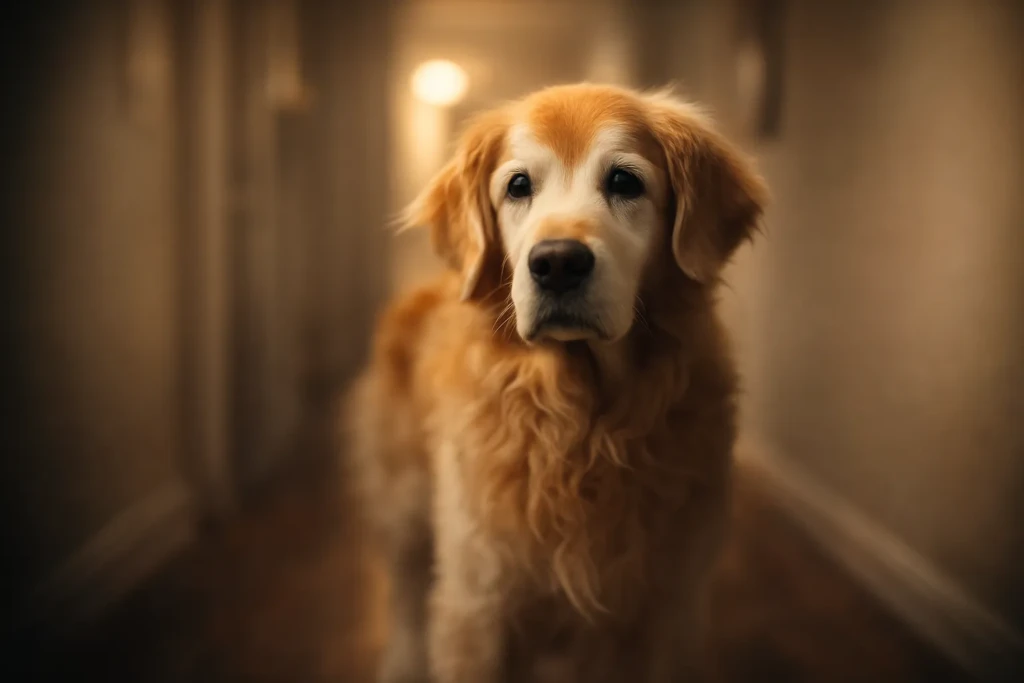
Confusion, wandering, nighttime anxiety, forgotten routines — dementia is not “old dog stubbornness.” It’s the brain aging, losing pathways, and asking for support, not structure. This article explains what canine dementia really is, why training and antidepressants fail completely, and how safety, clarity, and relational care become the foundation of dignity in old age.
When the Brain Ages, and Why This Has Nothing to Do With Obedience
Canine Cognitive Dysfunction (CCD), commonly called dog dementia, is one of the most heartbreaking but least understood conditions in older dogs.
People often mistake dementia symptoms for:
- stubbornness
- “old dog behavior”
- regression
- disobedience
- dominance
- attention-seeking
None of that is remotely accurate.
Dementia is neurological decline, not behavioral rebellion.
Let’s clarify what’s actually happening — without the sugarcoating.
What Dementia Really Is
Dementia is the gradual breakdown of communication within the brain:
- reduced blood flow
- impaired neurotransmitter activity
- disrupted circadian rhythms
- loss of spatial memory
- slower cognitive processing
- oxidative stress accumulation
The dog isn’t “forgetting commands.”
He’s losing access to entire neural pathways.
What Dementia Looks Like
These are the real signs, not the feel-good interpretations:
- wandering aimlessly
- staring at walls
- forgetting familiar people
- nighttime restlessness
- sudden anxiety or panic
- disorientation indoors
- altered social behavior
- vocalizing without clear reason
- forgetting housetraining
- increased clinginess or isolation
These are not training issues.
They are neurological symptoms.
What Causes Dementia?
A mix of:
- natural aging
- chronic stress throughout life
- unresolved trauma
- poor sleep architecture
- inflammation
- environmental unpredictability
- genetic predisposition
And yes —
a lifetime of training stress contributes significantly.
When dogs spend years overriding their internal states to avoid punishment or earn rewards, their stress systems age faster.
What NEVER Helps
None of the following will improve dementia:
- retraining
- obedience drills
- “mental stimulation” toys
- correcting confusion
- expecting consistency
- forcing engagement
- exposure to busy environments
The brain is losing processing power —
it does NOT need a challenge.
It needs support.
What Actually Helps
Dementia-supportive care focuses on reducing cognitive load and increasing safety signals.
This includes:
- extremely predictable routines
- soft movement transitions
- quiet environments
- gentle sensory input
- increased warmth and physical comfort
- soft social contact
- reduced pressure
- nighttime support (light, rhythm, touch)
- a calm, regulated human nervous system
Old dogs don’t need structure.
They need sanctuary.
Conclusion
Dementia is not a behavioral problem.
It’s a neurological decline that reshapes how the dog perceives and experiences the world.
Training cannot restore neurons.
It cannot rebuild processing pathways.
It cannot stabilize a brain that is losing its internal coordination.
And medication?
Antidepressants only add sedation on top of confusion — they never slow or reverse the decline.
Dementia needs compassion, not compliance.

